PowerAfrica 2026 in Nairobi was an important milestone for Nearly Free Energy (NFE). We attended as an IEEE Smart Village Energy Entrepreneur, with a simple goal: learn from people who have already built and scaled energy ventures in Africa, deepen our technology partnerships, and understand what it will take to move our Reliable Power Microgrids beyond the pilot stage.
Learning from entrepreneurs who have already scaled
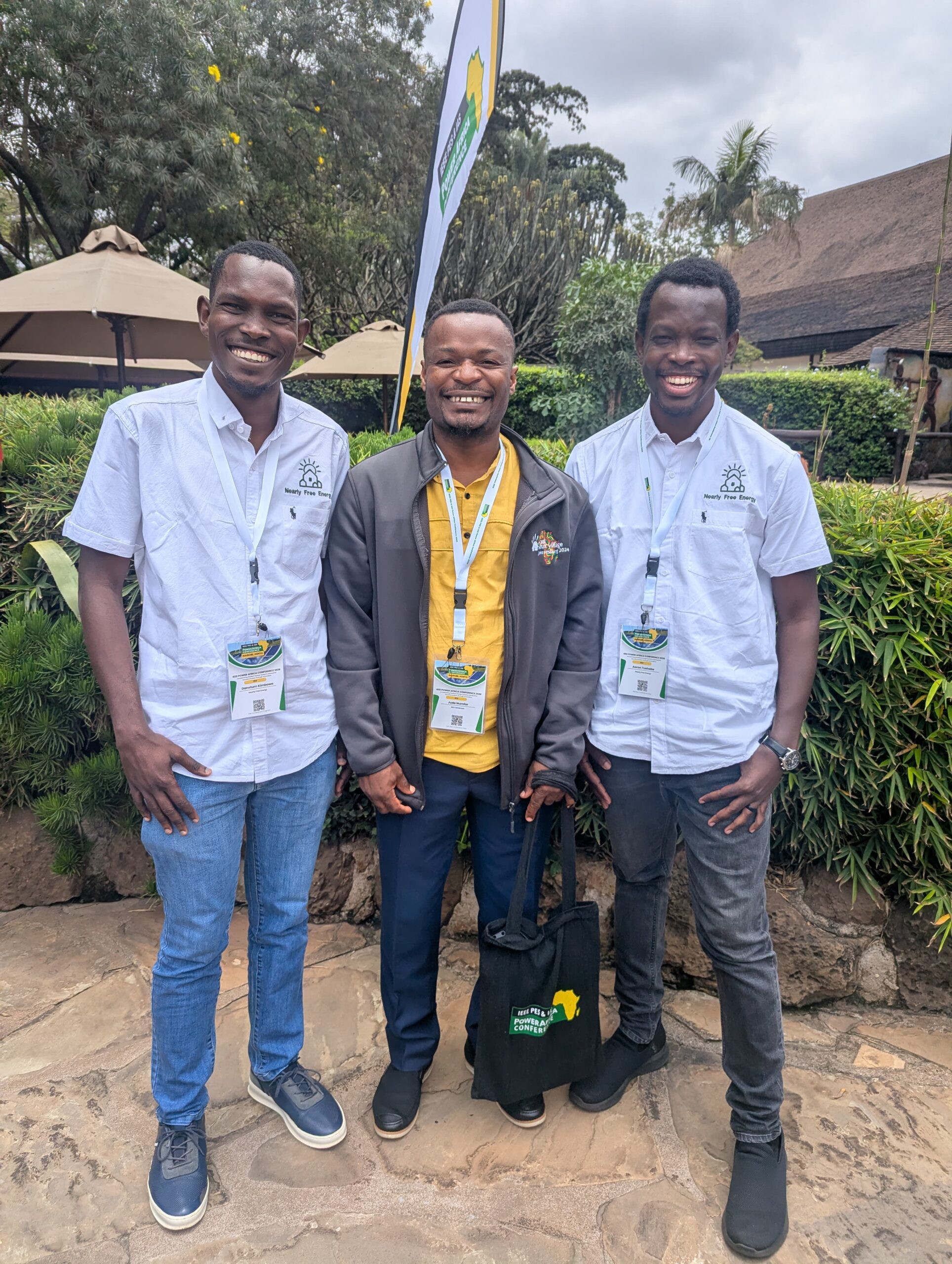
One of the most valuable parts of the week was connecting with experienced African energy entrepreneurs, including Jude from REI Cameroon and Ifeanyi from GVE Nigeria. Both were generous with their time and willing to share practical lessons from building energy businesses in their respective markets.
Jude, in particular, challenged the way we were thinking about growth. His advice was simple but important: it can be far more cost-effective to build a strong pipeline of projects than to develop and deploy one project at a time. That conversation has already influenced NFE’s strategy for scaling beyond our first microgrid. We are acting on that lesson today by putting more emphasis on developing a portfolio of qualified communities and projects rather than waiting to complete one deployment before preparing the next.
We are extremely grateful to Jude, Ifeanyi and IEEE Smart Village for creating an environment where this kind of practical peer learning could happen. For an early-stage energy venture, access to founders who have already travelled this road can be as valuable as access to capital.
A clearer pathway for long-term partnership with IEEE Smart Village
We also learned first-hand about IEEE Smart Village’s support and funding pathway for ventures aligned with its core pillars of Electrification, Education and Enterprise. What stood out to us was the rigor of the process. This is not simply a grant application; ventures are expected to demonstrate technical readiness, sustainable enterprise models, community impact, governance and a credible path to growth.
That is exactly the kind of long-term partnership NFE needs at our current stage. We are not only looking for capital to buy equipment. We need partners who can help us strengthen the enterprise, challenge our assumptions, improve our technical approach and prepare the model for replication. Following PowerAfrica 2026, NFE is now preparing to pursue the IEEE Smart Village enterprise funding pathway.
Metering 3.0 moved from an idea to something people could hold
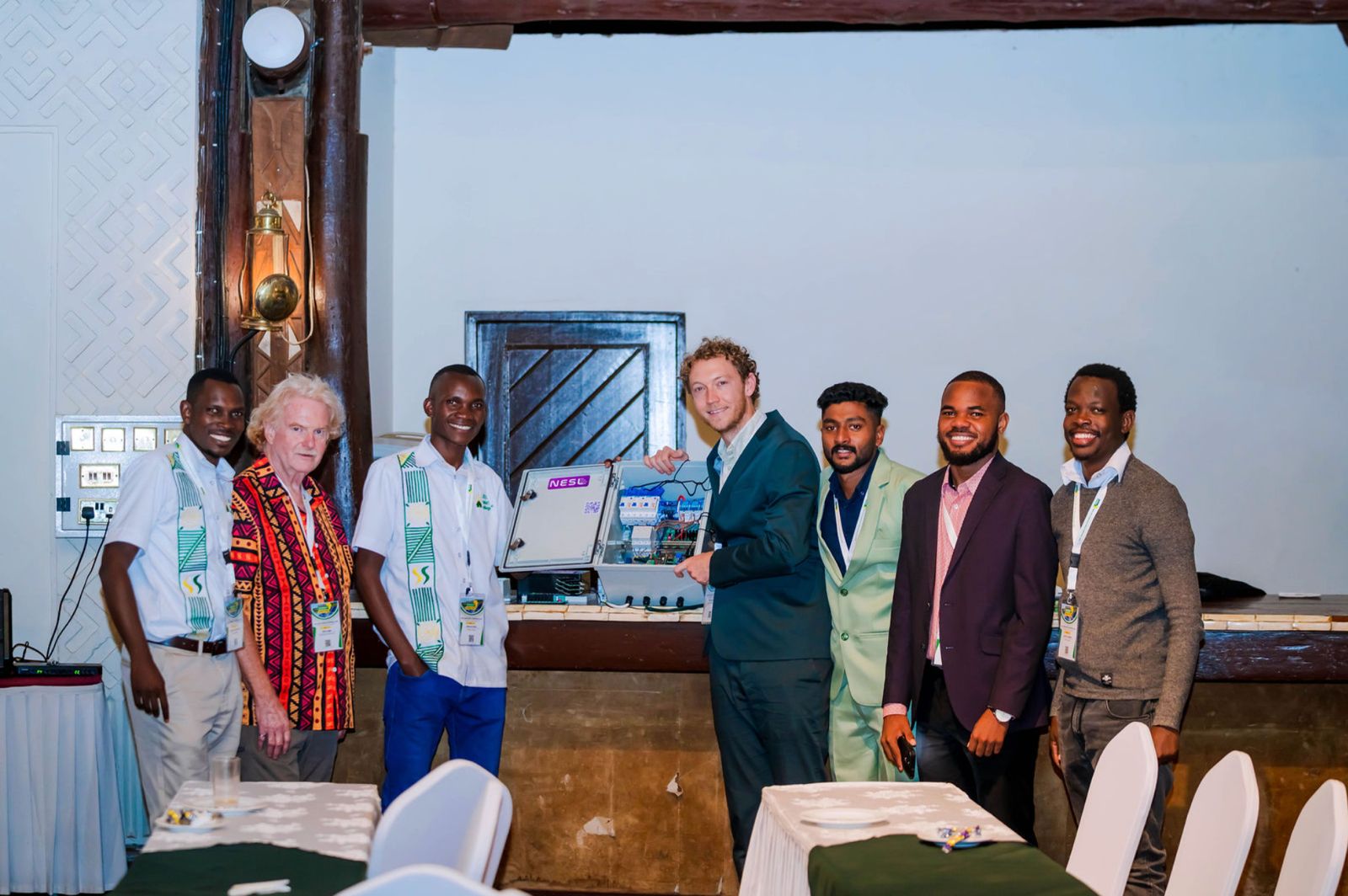
Another highlight was demonstrating our Metering 3.0 hardware collaboration with the IEEE Smart Village Technology Committee. This work is part of a longer metering journey for NFE.
We started with Generation 1: Calinmeter hardware sourced from China, paired with proprietary software. Our current pilot has moved to Generation 2: locally purchased CHINT meters integrated with open-source software and open protocols. Generation 3 goes further. The goal is open hardware, open firmware and open software, with equipment that can increasingly be assembled, maintained and repaired in-country.
The response at the workshop was encouraging. Fifteen participants picked up prototype EMS boards to test in their own projects. For us, that was an important signal that this work can be useful beyond NFE’s own deployments. Open, locally maintainable metering infrastructure has the potential to reduce vendor dependence while building technical capability within the markets where these systems operate.
Our next commitment is practical: NFE plans to deploy Metering 3.0 at our pilot microgrid before the end of Q4 2026. That deployment will give us a live environment in which to test the hardware, software and operating model together.
What this means for NFE
PowerAfrica reinforced something we have been learning through our work in Uganda: the energy challenge is increasingly about reliability, not only access. Many communities already have a grid connection but still cannot confidently depend on power being available when they need it.
NFE’s Reliable Power Microgrids are our response to that problem. At Sezibwa Rental Homes in Nansana, we have already progressed from smart metering and energy data collection to battery-backed reliability. The next steps are solar integration, a stronger local-energy backbone, continued development of the Microgrid OS, and the transition toward Metering 3.0.
But the biggest lesson from Nairobi was that scaling will require more than technology. It will require a pipeline of communities, experienced mentors, open technology collaborators and patient financing partners. That is why our relationship with IEEE Smart Village matters to us.
We left PowerAfrica 2026 with clearer priorities, new relationships and practical actions already underway. We are grateful to IEEE Smart Village for the invitation, for the opportunity to contribute, and for connecting NFE to a community of entrepreneurs and technologists who are building the future of energy access and reliability across Africa.
Leave a Reply