For more than a decade, the global energy access community has rightly celebrated one of development’s major achievements: the steady decline in the number of people living without electricity.
In 2010, roughly 1.2 billion people had no access to electricity. By 2020, that number had fallen to about 733 million. The latest global tracking reports show further progress, with about 666 million people still without basic electricity access in 2023. That progress matters. It represents hundreds of millions of households gaining light, phone charging, radio, refrigeration, digital connectivity, and the possibility of participating more fully in modern life.
But it also hides a second story.
Many people who are now counted as having electricity are still living with power that is too unreliable to transform their lives, businesses, schools, clinics, or communities. They are connected, but not truly served. Their homes have meters, but their evenings are still interrupted by blackouts, and they cannot rely on electricity for critical activities such as cooking. Their businesses are “electrified,” but they still need diesel generators. Their clinics may be connected to the grid, but still cannot rely on power for cold chains, lighting, diagnostics, or emergency care.
Energy access is not a switch
Too much of the global conversation still treats electricity access as a binary question: does a household have a connection or not?
That definition was useful when the most urgent task was extending first-time access. But it is no longer enough. A household that receives power for a few unpredictable hours a day is not in the same position as a household with affordable, stable, 24-hour electricity. A small business that loses power several times a week is not meaningfully “energy secure” simply because it has a grid connection.
The Sustainable Development Goal itself is broader than connection. SDG 7 calls for access to “affordable, reliable, sustainable and modern energy for all.” Reliability is not a footnote. It is part of the promise.
The World Bank’s Multi-Tier Framework makes this point clearly. It treats electricity access as a spectrum of service, not a yes-or-no condition. It considers dimensions such as capacity, duration, reliability, quality, affordability, legality, and safety. This is a better way to think about the problem because energy is not valuable merely because a wire reaches a home. It is valuable when power is available, usable, affordable, and dependable enough to support real life.
The hidden reliability gap
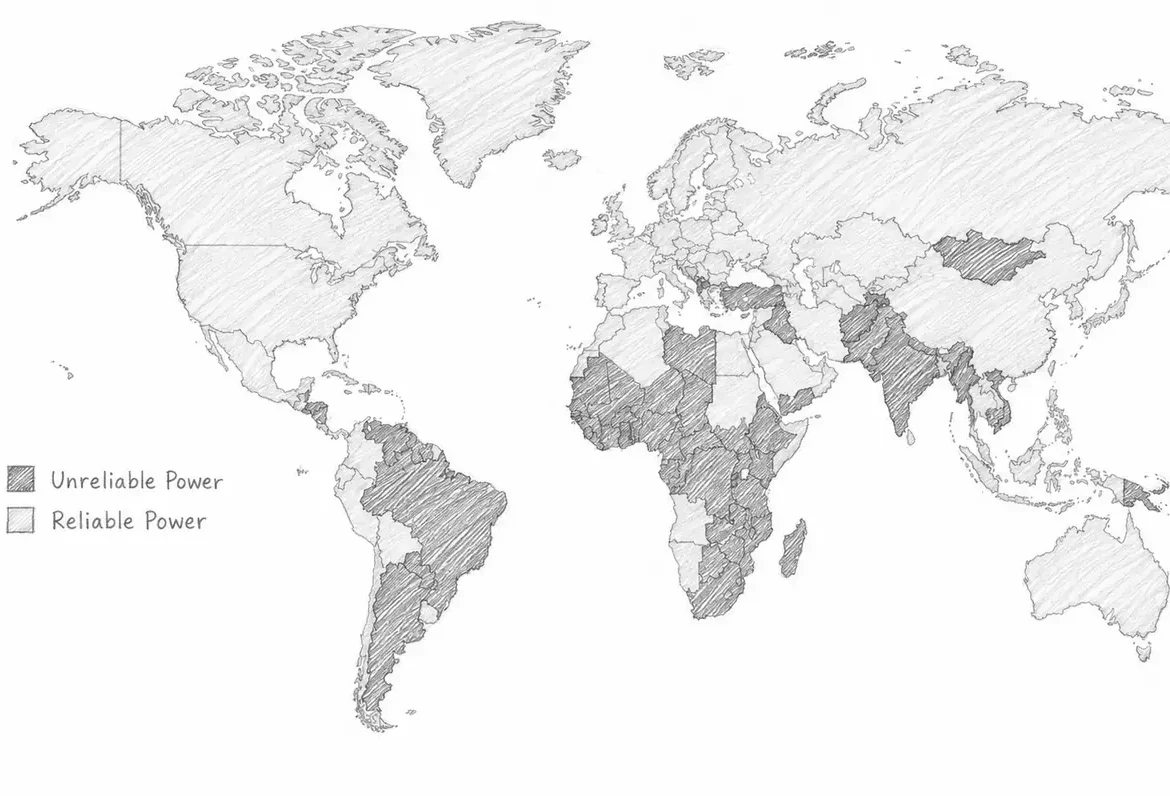
A 2020 peer-reviewed paper by John Ayaburi, Morgan Bazilian, Jacob Kincer, and Todd Moss estimated that approximately 3.5 billion people lack access to “reasonably reliable” electricity services. Their approach defined reasonable reliability as no more than one outage, or one hour of outage, per month on average.
That figure is striking because it reframes the energy access challenge. The world does not only have a problem of hundreds of millions of people without any electricity. It also has a problem of billions of people whose electricity is too unreliable to meet the ambition of SDG 7.
This distinction matters for policy and investment. If we only count connections, the global access story can look like a story of steady success. If we count reliability, the story becomes more urgent: many countries have expanded access faster than they have strengthened the grids that serve those new customers.
The result is a growing class of communities that are technically connected but still energy poor.
The communities in the middle
Our work at Nearly Free Energy focuses on these communities in the middle.
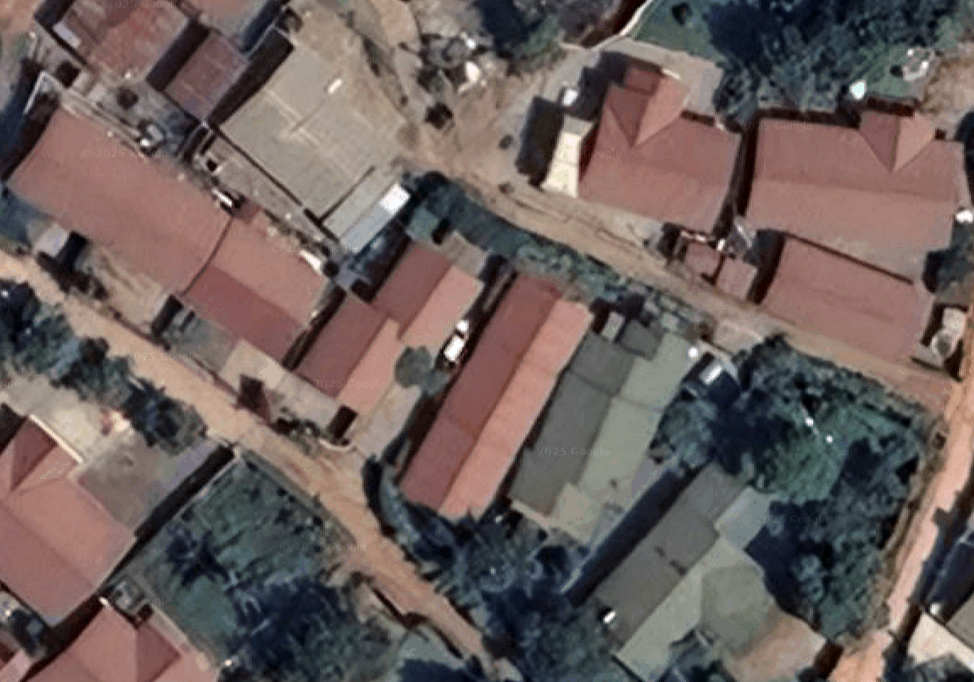
They are not always the remote, off-grid villages that dominate traditional energy access imagery. Many are urban and peri-urban communities. They are near the grid. They may already pay utility bills. They may have poles, transformers, meters, and national grid supply. But they also experience frequent outages, voltage problems, transformer overloads, rationing, or long restoration times after faults.
For these communities, the problem is not absence of infrastructure. The problem is insufficient reliability.
This is especially important in fast-growing cities and peri-urban areas across Africa. Demand is rising quickly. Households are adding appliances. Small businesses need refrigeration, welding, milling, printing, charging, internet access, and productive equipment. Apartment communities and estates are becoming denser. Electric mobility, water pumping, cold storage, security systems, and digital services all depend on electricity that works when needed.
A weak connection cannot support this future.
How grid-connected microgrids address the gap
The traditional energy access toolkit often divides the world into two categories: grid extension for connected areas and off-grid or mini-grid solutions for remote communities. But this leaves out a major opportunity: grid-connected microgrids for communities that already have access but not reliability.
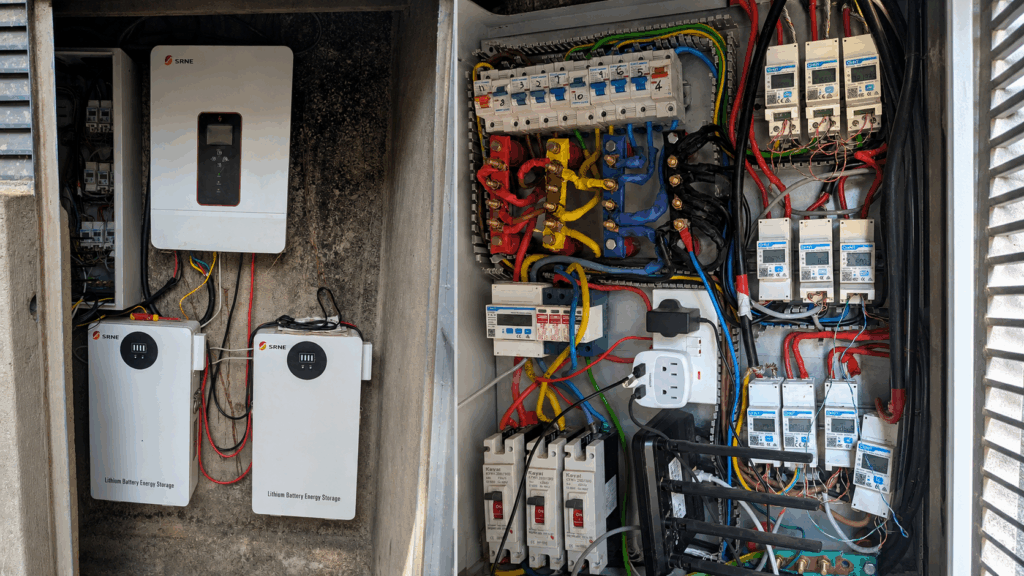
A grid-connected microgrid can strengthen a community from the edge of the grid inward. It can combine solar, battery storage, smart meters, controls, and the existing grid connection into a local energy system that improves reliability without abandoning the national grid.
This approach strengthens the main grid by treating it as one input into a more resilient local energy system.
When the grid is available, the community can use it. When the grid fails, the microgrid can keep essential loads running. When solar is producing, the community can reduce dependence on expensive and unstable supply. When batteries are charged, evening peaks and short outages can be managed locally. With smart metering and software, the community can see demand, manage consumption, collect payments, and plan upgrades over time.
In this model, microgrids are not only a tool for first-time access. They are a tool for reliable access.
Reliability is economic development
Reliability is not just a technical metric. It is a development outcome.
Unreliable power changes how people live and how businesses operate. It raises costs, reduces productivity, damages equipment, limits working hours, disrupts learning, weakens health services, and pushes households and businesses toward diesel generators and other expensive backup options.
A shopkeeper who cannot refrigerate drinks or food reliably loses income. A salon that cannot depend on power loses customers. A clinic that cannot maintain cold storage carries risk. A student who cannot study after dark loses opportunity. A residential estate that cannot pump water, run security systems, or power shared services experiences lower quality of life even though it is “connected.”
This is why the energy access community should treat reliability as central, not secondary.
The goal should not be to connect people to weak power systems and declare success. The goal should be to deliver electricity services that are good enough to change what households, businesses, and communities can actually do.
The investment gap is also a measurement gap
One reason the reliability problem receives too little attention is that it is poorly measured.
Most global access dashboards are better at counting whether people have basic electricity access than at measuring whether the power they receive is dependable. The Energy for Growth Hub has argued that standard access metrics do not adequately capture the qualitative aspects of modern electricity service. The Ayaburi, Bazilian, Kincer, and Moss paper was important because it attempted to quantify this hidden gap.
But the bigger lesson is not only the 3.5 billion estimate. The bigger lesson is that what we measure shapes what we build.
If we measure only new connections, institutions will optimize for new connections. If we measure reliable service, we will begin to finance and regulate systems that improve reliability, resilience, and quality. That means better utility performance, stronger distribution networks, smarter metering, distributed generation, battery storage, local energy management, and new business models for communities that are already connected but underserved.
The opportunity for advancing access through reliability
Nearly Free Energy’s mission is to advance energy access by focusing on the reliability gap.
We believe the next major frontier in energy access is not only reaching the last unelectrified households, important as that remains. It is also upgrading millions of weak-grid communities from nominal access to meaningful access.
Our focus is grid-connected microgrids for urban and peri-urban communities on unreliable national grids. These communities are close enough to the grid to benefit from it, but exposed enough to need local resilience. They do not need to wait for perfect national grid reliability before improving their lives. They can begin building reliability at the community level now.
This is a practical, scalable, and complementary approach. It can reduce dependence on diesel backup. It can improve customer experience. It can support productive use of electricity. It can relieve stress on local transformers and distribution infrastructure during peak periods. It can create better data on consumption and outages. And, when designed well, it can become a platform for future services such as electric mobility, water pumping, cold storage, internet infrastructure, and community-level energy planning.
From access to adequacy
The energy access movement has achieved a great deal by expanding the number of people connected to electricity. That work must continue. Hundreds of millions of people still lack even basic access, and they should remain a global priority.
But the next chapter must be more ambitious.
We should ask not only, “Is this household connected?” but also:
- Can the household rely on power in the evening?
- Can children study when they need to?
- Can businesses operate without diesel backup?
- Can clinics maintain essential services?
- Can communities power water, security, refrigeration, and communications?
- Can the local grid support growth rather than constrain it?
These are the questions that move us from access to adequacy.
The world has made real progress in reducing the number of people without electricity. But if billions remain connected to power they cannot rely on, then the mission of SDG 7 is still unfinished.
The future of energy access must be reliable, affordable, sustainable, and local enough to meet communities where they are.
That is the opportunity for grid-connected microgrids.
And that is the mission Nearly Free Energy is advancing.
How to fund our work.
References
- Ayaburi, J., Bazilian, M., Kincer, J., & Moss, T. (2020). Measuring “Reasonably Reliable” access to electricity services. The Electricity Journal, 33(7), 106828. https://doi.org/10.1016/j.tej.2020.106828
- International Energy Agency (IEA), International Renewable Energy Agency (IRENA), United Nations Statistics Division (UNSD), World Bank, and World Health Organization (WHO). (2022). Tracking SDG 7: The Energy Progress Report 2022. https://www.iea.org/reports/tracking-sdg7-the-energy-progress-report-2022
- World Health Organization (WHO), International Energy Agency (IEA), International Renewable Energy Agency (IRENA), United Nations Statistics Division (UNSD), and World Bank. (2025). Tracking SDG 7: The Energy Progress Report 2025. https://www.who.int/publications/m/item/2025-tracking-sdg7-report
- Bhatia, M., & Angelou, N. (2015). Beyond Connections: Energy Access Redefined. Energy Sector Management Assistance Program (ESMAP), World Bank. https://www.esmap.org/node/55526
- Energy for Growth Hub. (2020). 3.5 Billion People Lack Reliable Power. https://energyforgrowth.org/article/3-5-billion-people-lack-reliable-power/
- United Nations. Sustainable Development Goal 7: Ensure access to affordable, reliable, sustainable and modern energy for all. https://sdgs.un.org/goals/goal7