Category: Community

  • Open Energy Hackathon 2.0

    Open Energy Hackathon 2.0

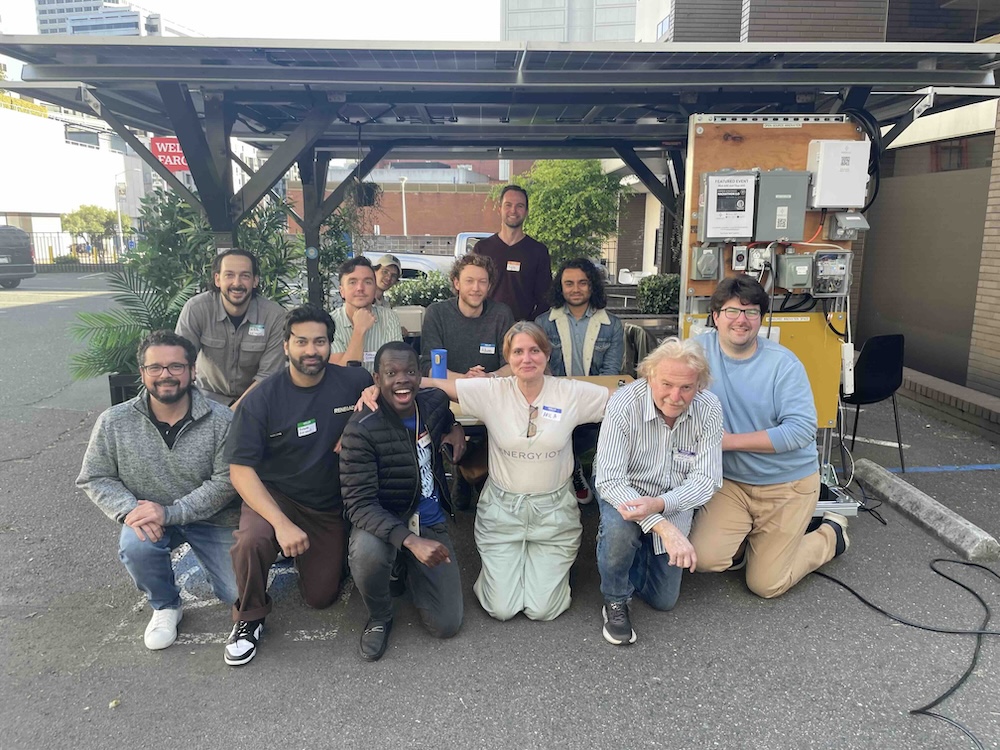
    It is hard to overstate the energy in the startup Hub that is San Franscisco. In April 2026, Nearly Free Energy took part in the second iteration of the Open Energy Hackathon at SF Climate Week organized by Energy IoT Open Source.

    The challenges

    This hackathon attracted about 20 participants and about 6 different challenges, 3 of those challenges were motivated by the work we are doing at NFE. And I was humbled to see more than 50% of the participants sign up for the NFE challenges

    Challenge #1 : Manual Recurring Billing

    Our business is selling (reliable) electricity. A key process is that we bill our customers at end of the month for the electricity they used the previous month. However our current process constitutes manual creation of invoices, manual compliance reporting and payment collection via mobile money. This requires about 2 to 3 hours of human time every month for our 10 pilot microgrid customers. Needless to say, this is not scalable not just because of the time it takes but frequency and cost of errors involved with human’s doing repetitive work. In March 2026 alone, invoices for 2 of our customers had human errors costing us about 5% of our monthly revenue and of course hurting our reputation with our customers.

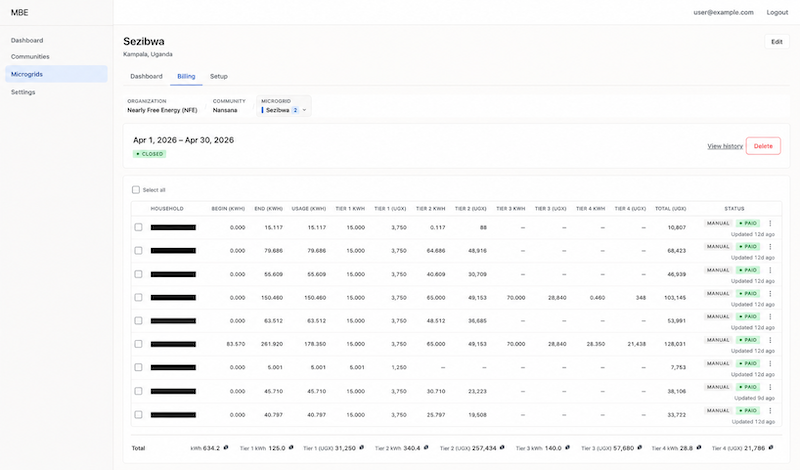
    Solution: Automated payments; during the hackthon, the team built and deployed to production an API integration between a new open source invoicing system (MBE) and local payment provider Pesapal. This service went live during the hackthon and we were able to use to for April billing cycle reducing the human effort by over 50% for that cycle.

    All this was made possible by the dedicated work of Open Energy advocates Alejandro M and Redwan H.

    Next steps: MBE continues to evolve as we add more capabilities. You can follow the project on github.

    Challenge #2 : No Real time Metering

    If there’s a capability that’s absolutely core to community microgrids, it’s metering. And we have come a long way with our metering capability since inception. For example we recently found a local supplier for smart meters who’s data is accessible openly. This is huge but our current process still required us to read the data from those meters manually which is very human error prone as well and huge risk to the business because of it’s impact on revenue and customer experience.

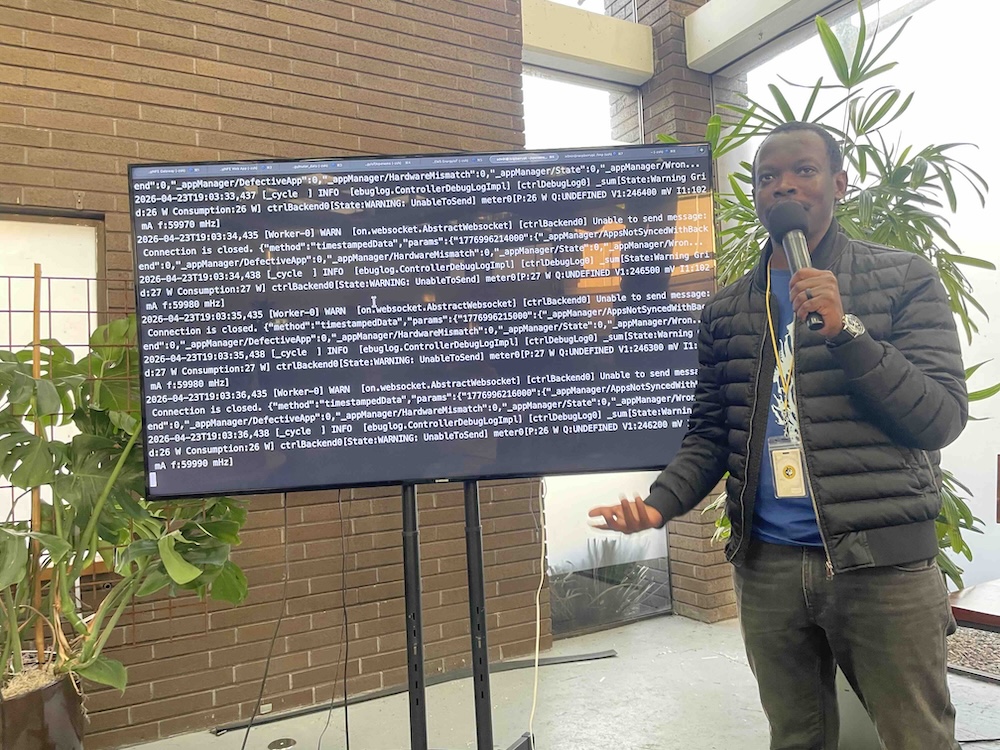
    Solution: During the hackathon, we prototyped using OpenEMS to read data remotely in real-time from our newly installed DDSU666 chint smart meters. We were able to successfully demo this integration and a few days ago, we managed to get the change merged into OpenEMS!!! This is our first major contribution to the project we hope to continue contributing to as NFE.

    Next steps: We are working on deploying OpenEMS to our pilot microgrid by the end of the month. Look out for a more detailed post on our Metering 2.0 stack later next month.

    Huge thank you for our Open Energy advocates Guru Prakash, Matthew G and Nicolas F Nunez-Sahr for their work on making this happen in less than 2 days.

    Challenge #3: Onsite only on/off relay control

    One of the reasons NFE using postpaid by default is because it was just so much easier to set up technically, just measure usage and send a customer a bill at the end of the month. However, in the event of non-payment, we turn off the power and currently, this is done manually by the on-site microgrid manager or a technician. And the same process is repeated to turn the power back on when the customer makes a payment. All this movement of humans is no cheap and is error prone. Meters that come with in-built relays were too expensive to procure for our business size and already require expensive propriertary software to communicate with them

    Solution: Let me introduce you to Open AMI with meshEMS hardware: It’s a project with an audacious vision of enabling microgrid operators to design metering and grid control open source hardware, firmware and software. And train them to assemble the hardware in country to bring other cost of purchase and maintenance down by more than 50%.

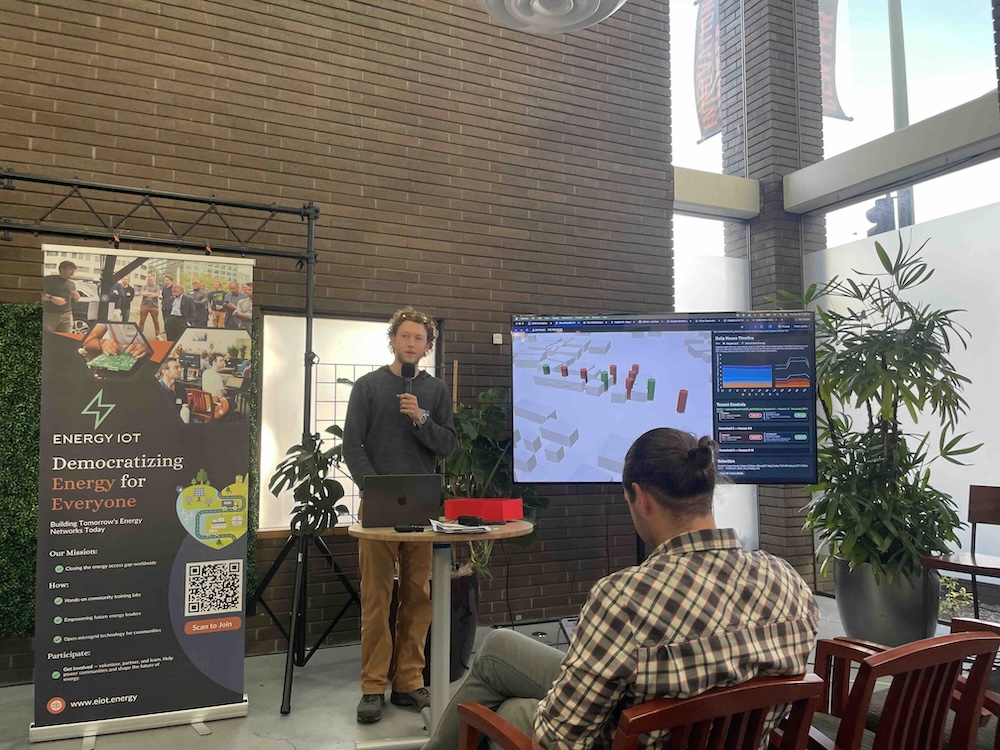
    During the hackathon, we designed a prototype for a simple relay we can control remotely to turn. Demo-ed with this visual simulation the team made.

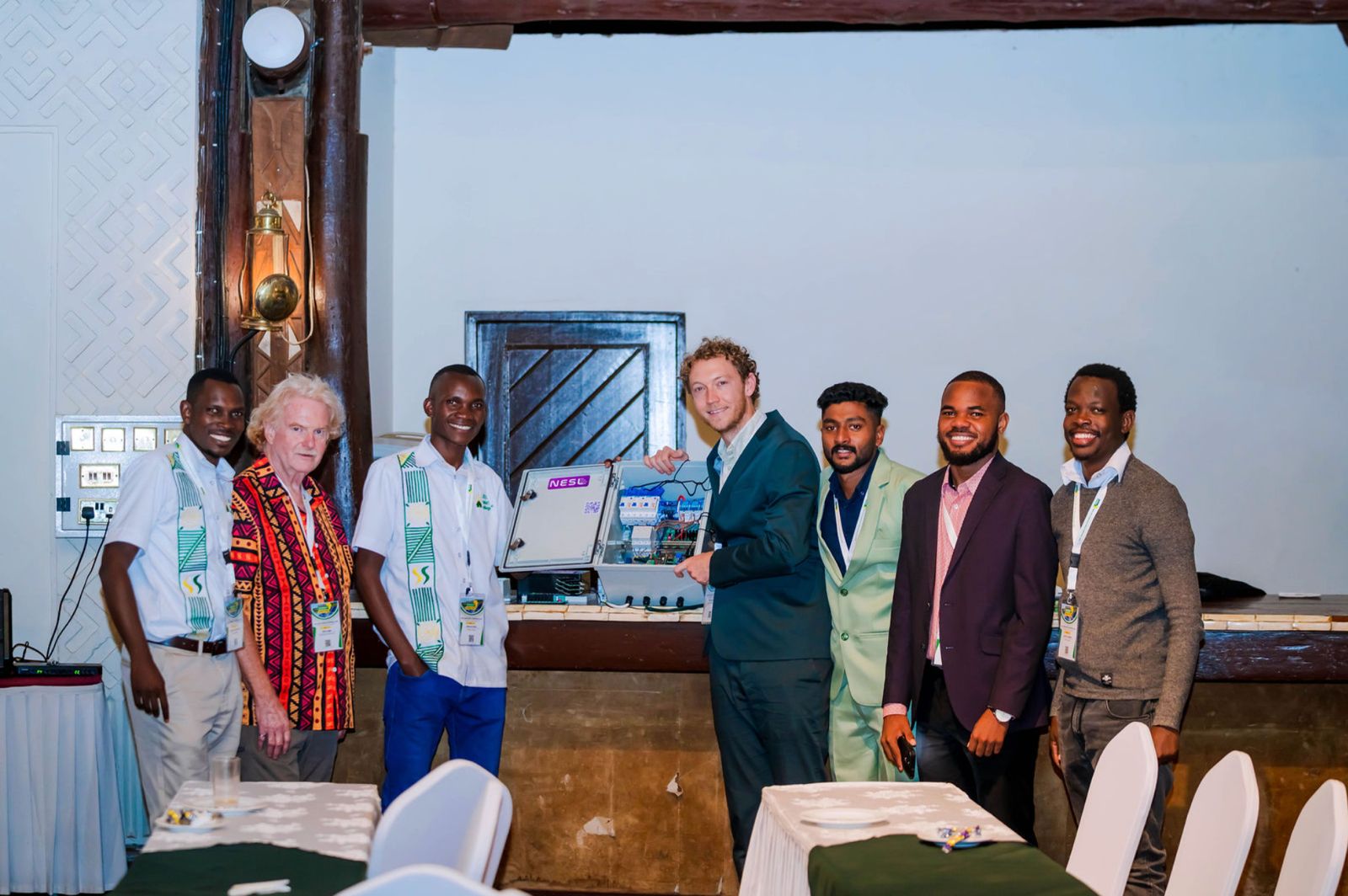
    Next Steps: The brilliant people at NESL have donated some meshEMS hardware to NFE so we can test out the relay in production later this year and their founder Glenn will be coming to the Power Africa Conference in September 2026 to offer a training workshop to help us continue to leverage Open AMI ecosystem and meshEMS hardware.

    Huge thank you to Adam S, Kyle B for leading the team that crushed this challenge.

    All 3 challenges and the entire hackathon were made possible by the support of mentors Liam O, Glenn A and the amazing Arila B from Energy IoT Open Source. And of course hosted at Informal Spaces in Oakland run by Kyle V.


    A million thanks everyone for contributing your ideas, skills, time and heart to this theme.

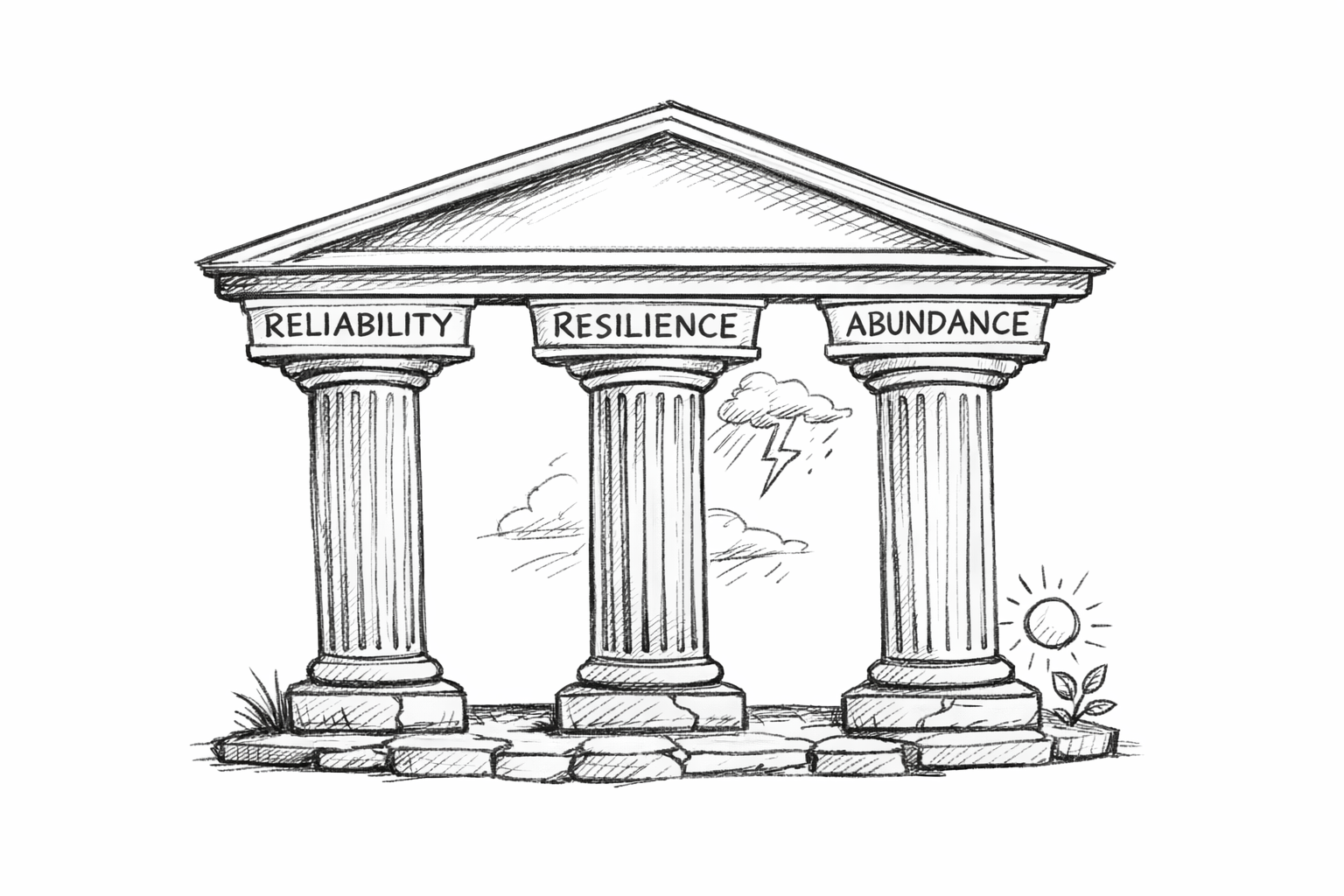
    Community Microgrids need a community owned and supported software/hardware foundation to deliver on their promise of reliable, resilient and abundant energy for everyone.

    Thank you all for helping lay that foundation!

    Onward.. Upward.. ⚡

    As always, if this work sounds relevant to you or your community. Get involved! 👇🏾

    Energy IoT on Zulip
    Energy IoT Open Source LinkedIn
    Nearly Free Energy Matrix Room
    NFE on LinkedIn

  • The Three Pillars: Energy Reliability, Resilience and Abundance

    The Three Pillars: Energy Reliability, Resilience and Abundance

    Why these three ideas sit at the center of our work at Nearly Free Energy

    When people ask what really drives our work at Nearly Free Energy, I usually come back to three words: reliability, resilience, and abundance.

    They sound technical at first, maybe even like utility jargon. But in reality, they describe very human experiences; the frustration of power going off in the middle of the day, the anxiety during a long blackout, and the quiet calculation people make every month about whether they can afford to pay their electricity bill.

    These three qualities shape how we think about energy, how we design our systems, and why we exist as a company.


    Reliability: Keeping the Lights On During Everyday Life

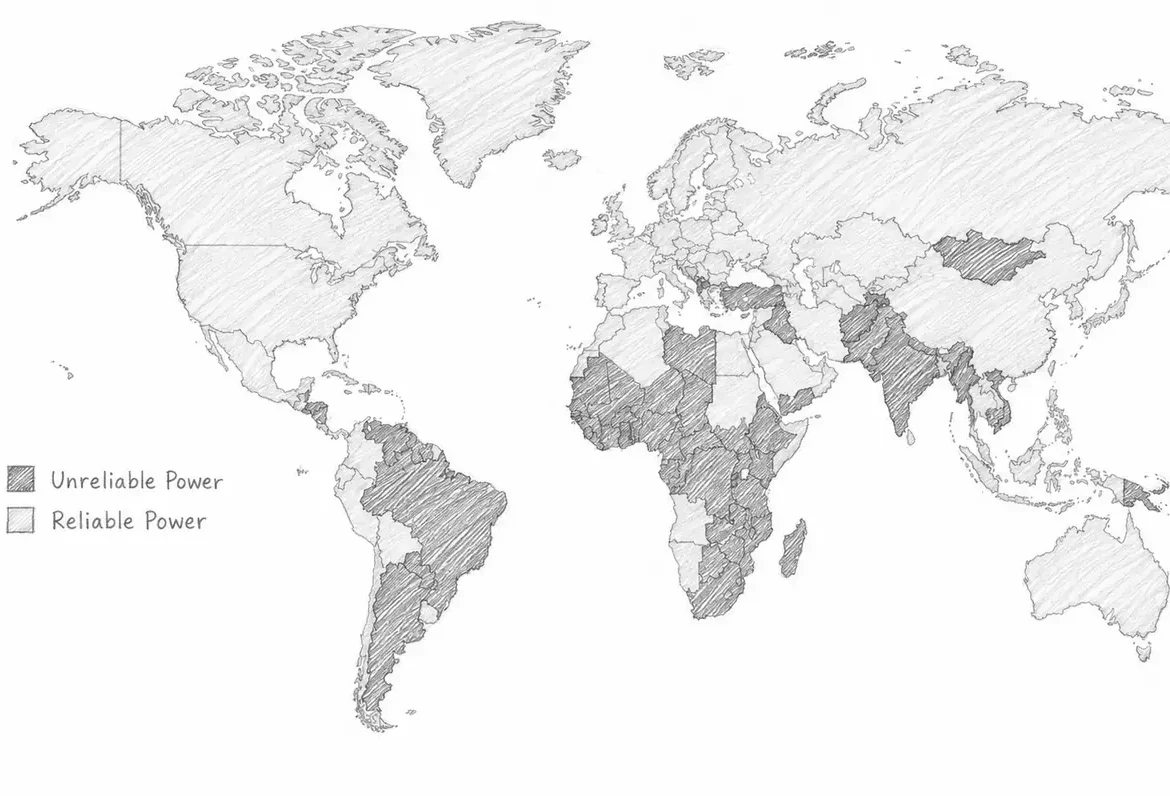
    Reliability is the one most of our customers immediately understand — because they live with unreliable electricity every single day.

    At its simplest, reliability is about providing uninterrupted power under normal conditions and during expected, short disruptions ; things like minor equipment failures or routine storms.

    The usual ways to measure reliability are pretty straightforward:

    • how often outages happen (frequency)
    • how long they last (average duration and time to restore)

    The goal here is simple: electricity should stay on during everyday events.

    How we work toward reliability

    Automated backups
    We collect detailed outage data from the communities we serve. When the grid goes down, backup power comes on automatically. Because we track outage frequency and duration, we can size these backups more accurately; not guessing, but responding to real patterns.

    Predictive maintenance
    We invest in high‑quality equipment; meters, inverters, solar panels, batteries and we monitor them continuously. That lets us spot performance issues early and fix them before they turn into outages. The goal is to prevent failure, not just respond to it.

    Reliability is about trust. When people flip a switch, they shouldn’t have to wonder whether power will be there.


    Resilience: When Things Go Really Wrong

    Resilience is often misunderstood, even within the energy industry.

    While reliability focuses on normal conditions, resilience is about rare but severe events: floods, major grid failures, fuel shortages, or system-wide breakdowns that cause long outages.

    Resilience asks a different question: when something big goes wrong, how quickly can we recover — and what can we keep running in the meantime?

    Key metrics here include:

    • mean time to restore power
    • the percentage of critical services kept online

    The goal isn’t perfection. It’s to minimize the damage of a catastrophe.

    How we design for resilience

    Microgrids
    We build grid-connected but islandable microgrids; smaller networks that can disconnect from the main grid and operate independently when necessary. This prevents a single failure upstream from taking everyone down with it.

    Peak‑shaving and load prioritization
    During severe outages, not every load can be supported equally. We design systems that prioritize critical needs; lighting, refrigeration, communications; instead of spreading limited power too thin.

    Resilience is about dignity during crisis. Even when systems fail, life shouldn’t come to a halt.


    Abundance: Energy You Can Actually Use

    Abundance is our favorite of the three; because it’s the one that changes behavior.

    Energy abundance means electricity is both sustainable and affordable. People shouldn’t have to choose between using power and protecting the environment. And they shouldn’t feel anxious every time they turn something on.

    Our working definition is simple:

    • energy is generated from renewable sources (like sunlight)
    • electricity costs less than 2% of a household’s monthly income

    When those two conditions are met, we consider energy truly abundant.

    Key metrics include:

    • percentage of energy from renewables
    • the ratio of monthly electricity bills to household income

    The goal is clear: expand access to clean energy without financial stress.

    How we work toward abundance

    Renewables only
    We made a deliberate and costly decision to run our microgrids on 100% renewable energy. Lithium‑ion batteries are expensive upfront, but they allow solar to serve not just as backup power, but eventually as the primary source for entire communities.

    Usage transparency
    We use smart meters that give customers real‑time insight into how their homes consume electricity. When people can see usage as it happens, they can adjust behavior immediately keeping bills affordable without guesswork.

    With abundance comes freedom: freedom to cook, study, work, and live without constantly counting units.


    The Three Pillars, Together

    Reliability, resilience, and abundance aren’t independent ideas. They reinforce each other. They are at the heart of the energy access movement.

    When energy is reliable, people trust it.
    When it’s resilient, communities survive disruption.
    When it’s abundant, energy becomes an enabler rather than a constraint.

    At that point, electricity stops being just a commodity to manage.

    It becomes a tool for community transformation.

    That’s the future we’re building at Nearly Free Energy. Learn more here

  • Go-live: Pilot at Sezibwa Rental Homes, Phase 1.0

    “Even a journey of 1000 miles begins with a single step”
    ~ Ancient Chinese Proverb

    Location

    In September 2025, we deployed our first microgrid to a small community of 10 customers in a small densely populated town called Nansana, right outside the Ugandan capital of Kampala.

    The goal

    To demonstrate that a grid connected microgrid can provide a sustainable way for a community to provide power at a lower cost through bulk billing and allow the community to monitor their energy usage for solar and battery backup sizing.

    The problem

    We have 10 residential energy consumers connected to the main grid. They consume about 1 to 3 kWh a day each which costs them about 80,000 UGX per month for each household. However they get 6 to 12 hours of unscheduled and indeterminant power outages every week for all the reasons shared here.

    From what they shared, the closest transformer they are connected to may be overloaded causing phase to phase voltage to significantly drop occasionally but we didn’t have the data to verify this before deployment.

    The technical details

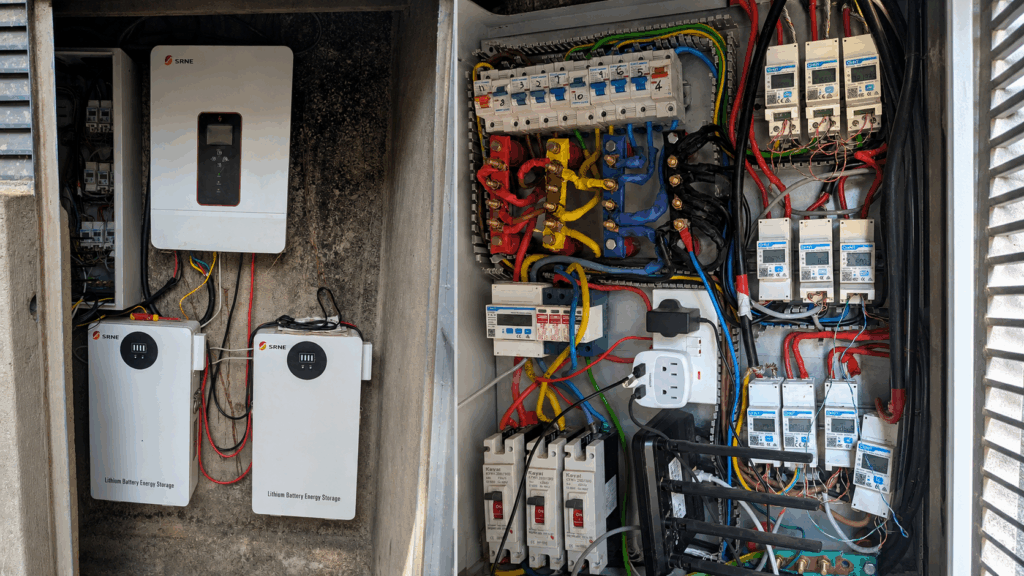
    We deployed extended a 3 phase main grid connection and reconnected the homes to the grid via this connection. The connection to the grid is metered with a large commercial 3 phase meter controlled by UEDCL. The connection is sized to deliver 415V, 100A (240V phase to phase) for up to 30 kWh load. That meter is mirrored by another 3 phase meter we control.

    Single phase connections to each household are metered by smart meters connected to an AMI provided by the meter supplier.

    Tech Stack

    Metering: Din rail Calin Smart Meter with inbuilt relays and LoraWAN modules

    Connectivity: Central LoraWAN gatway that is 4G enabled with SIM card.

    AMI: CalinAMI for hourly meter readings and remote on/off.

    Communication: Whatsapp for customer support and a Microgrid Manager who resides in the community.

    Billing: Monthly postpaid payments via Pesapal (Mobile Money, Visa/Mastercard). Invoicing managed via EFRIS.

    Finances: We are tracking our spending and inflows (contributions and income) via Open Collective here.

    Documentation: Most information about this microgrid is available on our public Wiki here.

    Present Challenges

    Metering: We are seeing anomalous behavior with the smart meter connections getting dropped. It maybe coming from clustering LoraWAN enabled meters in a meter box but we don’t know at this point. We do get enough connectivity to collect and view high fidelity data on daily usage patterns on most days.

    Next Release: Phase 2 goals

    Backup: The primary goal is to deploy batteries and or solar capacity to handle at least 6 hours of a power outage during peak demand windows (6pm to 12 midnight).

    Metering 2.0: Secondarily we’d like to move to an Open Source AMI we can modify ourselves instead of the proprietary one we currently use. And since our meters are clustered, we’d like to connect to them directly via RS485/Modbus to a raspberry-pi running OpenEMS edge. We think hard wiring to the meters locally will be a more stable solution than the wireless connectivity via LoraWAN.

    CRM: We would like to switch to MicroPowerManager for our CRM. We need to add invoicing and postpaid capabilities to it and integrate it with EFRIS which we must continue using for easier tax compliance.


    For more on this project, you can connect with the NFE team via our public channel on Matrix or receive our quarterly progress updates via our community mailing list.

    You can also make contributions to the project to support phase 2 via Open Collective here.

  • Why Kampala Keeps Going Dark: What’s Really Behind the Outages

    In order to ground ourselves deeper into the problem of energy resilience in Uganda, we decided to do some exploratory research into the actual root cause of power outages in urban areas of Kampala over the past 5 years.

    We reviewed reports by the main power distributor (UMEME/UEDCL), interviewed some of their staff who were willing to share some internal information off the record and also reviewed other recent academic publications that have explored the same question.

    Here’s what we learned are the main causes but first, we also asked the general public living in Kampala today to appreciate what they believed was the cause of the power outages they experience daily in their homes, workplaces and businesses.

    What the residents think

    We surveyed over 150 residents in Kampala and here’s what they think causes power outages. They are not wrong, well, most of them but as we’ll learn from the data, the reasons are lot more nuanced.

    Here’s some interesting “other reasons” respondents provided in their own comments

    • Sheer incompetence
    • Maintenance routines
    • All the above plus negligence
    • By road construction in the neighborhood
    • DIVERSITY FACTOR
    • Inadequate technical HR
    • Old transformers
    • Overpopulation in areas that were not planned for extra power supply
    • Other technical issues (faults) possibly due to power surges
    • Sometimes it goes off and yet the yaka meter is still reading. Not sure what causes that.
    • The network assets are aged and not replaced on time
    • Transformer blow out
    • Mostly for my concern some areas with transformer…lack enough Earthing and neutral loss

    If you’re wondering what that respondent meant by “DIVERSITY FACTOR”, so are we 😄.

    What our research told us

    Over the last five months, we’ve been digging into why Kampala’s power seems to have a habit of disappearing — sometimes without warning, often at the worst possible times. After poring over Umeme’s technical reports, talking to regional managers, and looking closely at Kampala-specific data, a picture has emerged: it’s not one single thing. It’s a mix of design choices, the weather, aging equipment, growing demand, and a few human factors thrown in for good measure.

    The short version? Our city runs mostly on a radial network — think of it as one-way streets for electricity. If a section goes down, everyone downstream is left in the dark. Add to that trees growing year-round into overhead lines, transformers working way past their limits, and a lot of unplanned connections pulling unpredictable loads… and you’ve got the perfect recipe for frequent outages.

    Here’s the longer version;

    1. The Way the Network Is Built

    Most of Kampala’s grid is set up in a radial design. That’s fine for smaller, less dense areas, but in a busy city it’s a weak point. In a ring network, power can be rerouted if something goes wrong. In a radial network, there’s only one path. One fault and everything connected to that line goes out.

    • No backup routes: Because of this, repairs mean shutting down the whole section.
    • Too spread out: Feeders (distribution lines from substations) are about 70km long on average; best practice is closer to 10km.
    • Overloaded substations: Too few to cover the area properly.

    2. The Weather and the Trees

    Uganda’s climate is a blessing for farmers, but not so much for overhead power lines. Vegetation grows year-round, and keeping it in check is an endless job. Throw in heavy rains and storms, and things get messy fast.

    • Wooden poles: 95% of the infrastructure is overhead and wooden — not great in bad weather.
    • Flooding risk: 22% of substations are in flood-prone areas.
    • Proof in the underground: Areas with underground cables rarely lose power because of weather meaning that underground power lines maybe more weather resilient than overhead ones.

    3. Transformers Under Pressure

    Over the last five years, Kampala’s added about 850,000 new customers… but fewer than 1,000 new transformers. That’s an 850-to-1 ratio. This is not even accounting for the load electrifying our mobility will add to the grid. Transformers are burning out because they’re simply carrying more load than they were designed for.

    • Common failures: Overloading, unbalanced phases, overheating, and harmonics from electronics.
    • Impact: Each replacement takes about a day; smaller repairs still knock things out for hours.

    4. Metering Problems and Power Theft

    It’s not just the equipment on the poles. On the ground, faulty meters and illegal connections are causing their own havoc. In high-risk areas, 74% of meters tested were faulty, and tampering is common.

    • Losses: Kampala accounts for 70% of Umeme’s commercial losses.
    • Effect: Unmetered loads cause sudden demand spikes that the system can’t predict or handle.
    • Cost: Millions of dollars in lost revenue and higher stress on the network.

    5. Old Equipment, Slow Replacement

    The grid has doubled in size since 2005, but much of it is old and overdue for replacement. Maintenance is mostly reactive — fix it when it breaks — which means problems build up.

    • Aging assets: Large sections are nearing the end of their life.
    • Vandalism: From stolen equipment to wayleave violations, human interference is a real factor.

    6. Performance and Investment Gaps

    Electricity distribution has improved in some ways; faster emergency response, high revenue collection but investment is still limited. When Umeme’s concession was nearing its end, long-term projects were scaled back which means there is plenty more overdue renovations that UEDCL has to undertake over the next few years. We can expect general reliability to get worse before it gets better.

    So, What Needs to Change?

    If we want fewer blackouts, the fixes aren’t complicated in concept — they just take commitment, money and a lot of innovation:

    • Add redundancy: Especially in high-density areas, so faults don’t take out whole neighborhoods.
    • Go underground: At least in critical zones where weather and trees are constant problems.
    • Plan ahead: Build capacity for the demand we know is coming, not just what’s already here.
    • Automate monitoring: So we spot problems before they knock things out or at least before customers report them.
    • Manage vegetation smarter: Technology can help track and predict growth near lines.

    NFE’s Reliable power microgrids are pushing these resolutions forward by introducing redundancy, underground lines and real-time monitoring in high-density urban neighborhoods using microgrids. Learn more about our work here.

    Bottom line

    Kampala’s outages are the result of a network that’s stretched too thin, exposed to the elements, and playing catch-up with a fast-growing population. The solutions are clear but unless we shift from reactive fixes to proactive investment, we’ll keep finding ourselves in the dark.


  • Our Microgrid Cultivation Blueprint

    Our goal to build community owned microgrids and teach others to do the same.

    This means our initiatives are not considered “Complete” till we exit and empower the community to energy independence. I’d like to talk a little about how we intend to achieve this.

    Why Community Ownership matters

    • Sustainability: when the community owns the energy resources, they have incentive to make the product better because they stand to benefit as customers and owners. This drives down cost of energy for them long term and leads to a sustainable (self-funding) model.
    • Agency: ownership helps guard against perverse incentives that could benefit owners at the risk of hurting customers. The community can take a driving seat in the decisions on future of their microgrid.
    • Efficiency: In our experience, there’s a organic desire to conserve and use energy responsibly that is cultivated when the community can think of the energy resources as “our own power”. So it turns out, ownership is a brilliant way to address energy waste and encourage responsible use.

    Building community owned microgrids

    Our conviction is that people should live in communities and we want to help cultivate that. So our primary target customers are residentials first (and adjuscent businesses like schools, hospitals, saloons, shopping centers, restaurants) that already have a sense of community around them. This can take on different shapes like a rental apartment complex or a set of homes under the same home owners association.

    We build a community owned microgrid for such communities through a 4 phase journey.

    Phase 1: Data Ownership with a Microgrid Operating System

    We deploy a microgrid OS for that community with smart metering capabilities. This microgrid OS is powered by free/open source software to protect the community’s freedom and start them on their energy independence journey by giving them ownership of the data generated by their energy use. The microgrid OS also enables usage data analysis which informs load sizing in the next phase. The smart metering capability enables bulk purchase of power from the grid which can generate income to fund the next phases. The microgrid resells energy as a service to the community.

    Phase 2: Backup

    Our communities deal with frequent macrogrid power outages. For most of them, having a reliable electricity is the main value proposition for setting up a microgrid. In phase 2, we deploy right sized solar and or battery capacity to provide backup power during macrogrid outages and increase energy reliability for the community

    Phase 3: Backbone

    After achieving nearly 100% power reliability, we now invest in reducing the community’s reliance on the macrogrid. We increase battery capacity and add onsite renewable generation capacity like solar to grow our backup into the main source and then rely on the macrogrid as a backup. This further drives down the cost of energy for the community and stimulates growth in new businesses and quality of life for people living there.

    Phase 4: Energy Independence

    NFE exists as co-owner of the microgrid by transfering the operational microgrid to an entity (another co-op) representing the community. This can be started during phases 1 to 3 by baking in lease-to-own economics into the energy as a service contract NFE has with the community.

    Teaching others to do the same

    Along the way, we are sharing everything about how and who we work with. How things work and offer training for those who want to learn so that others (especially the communities we serve) can run with the same vision. All these are documented on our website here or in our Community Library here.

    And that’s all. Community Owned Microgrids in 4 Phases.