It is hard to overstate the energy in the startup Hub that is San Franscisco. In April 2026, Nearly Free Energy took part in the second iteration of the Open Energy Hackathon at SF Climate Week organized by Energy IoT Open Source.
The challenges
This hackathon attracted about 20 participants and about 6 different challenges, 3 of those challenges were motivated by the work we are doing at NFE. And I was humbled to see more than 50% of the participants sign up for the NFE challenges
Challenge #1 : Manual Recurring Billing
Our business is selling (reliable) electricity. A key process is that we bill our customers at end of the month for the electricity they used the previous month. However our current process constitutes manual creation of invoices, manual compliance reporting and payment collection via mobile money. This requires about 2 to 3 hours of human time every month for our 10 pilot microgrid customers. Needless to say, this is not scalable not just because of the time it takes but frequency and cost of errors involved with human’s doing repetitive work. In March 2026 alone, invoices for 2 of our customers had human errors costing us about 5% of our monthly revenue and of course hurting our reputation with our customers.
Solution: Automated payments; during the hackthon, the team built and deployed to production an API integration between a new open source invoicing system (MBE) and local payment provider Pesapal. This service went live during the hackthon and we were able to use to for April billing cycle reducing the human effort by over 50% for that cycle.
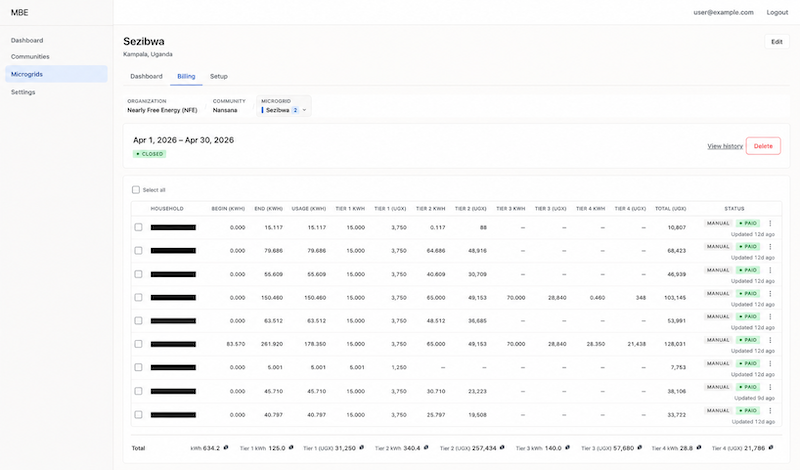
All this was made possible by the dedicated work of Open Energy advocates Alejandro M and Redwan H.
Next steps: MBE continues to evolve as we add more capabilities. You can follow the project on github.
Challenge #2 : No Real time Metering
If there’s a capability that’s absolutely core to community microgrids, it’s metering. And we have come a long way with our metering capability since inception. For example we recently found a local supplier for smart meters who’s data is accessible openly. This is huge but our current process still required us to read the data from those meters manually which is very human error prone as well and huge risk to the business because of it’s impact on revenue and customer experience.
Solution: During the hackathon, we prototyped using OpenEMS to read data remotely in real-time from our newly installed DDSU666 chint smart meters. We were able to successfully demo this integration and a few days ago, we managed to get the change merged into OpenEMS!!! This is our first major contribution to the project we hope to continue contributing to as NFE.
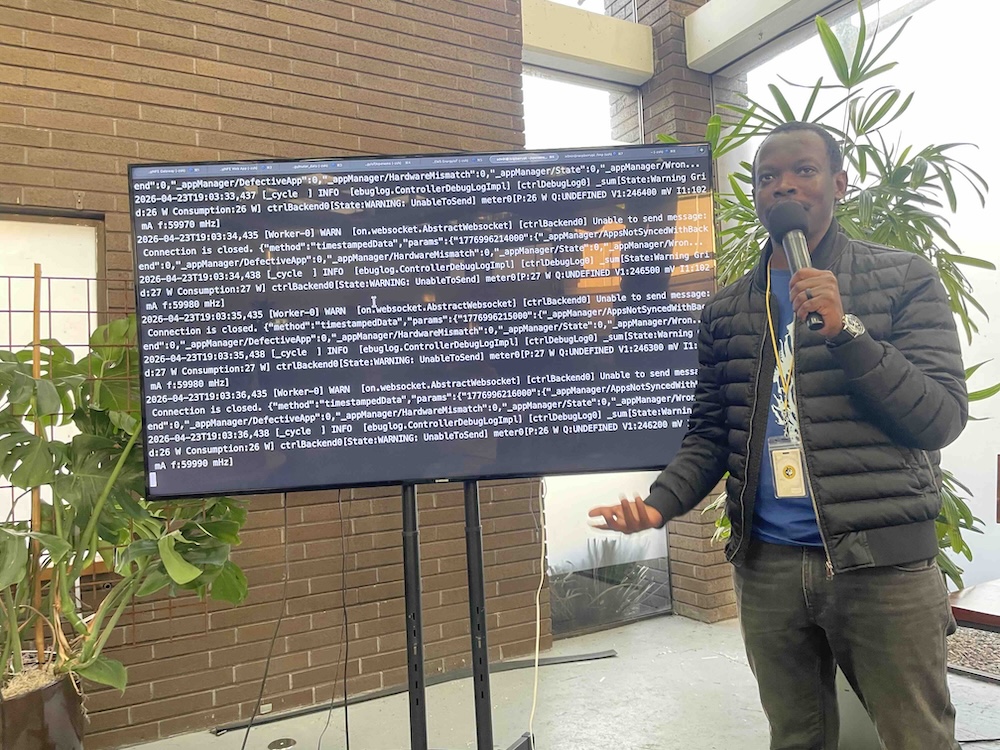
Next steps: We are working on deploying OpenEMS to our pilot microgrid by the end of the month. Look out for a more detailed post on our Metering 2.0 stack later next month.
Huge thank you for our Open Energy advocates Guru Prakash, Matthew G and Nicolas F Nunez-Sahr for their work on making this happen in less than 2 days.
Challenge #3: Onsite only on/off relay control
One of the reasons NFE using postpaid by default is because it was just so much easier to set up technically, just measure usage and send a customer a bill at the end of the month. However, in the event of non-payment, we turn off the power and currently, this is done manually by the on-site microgrid manager or a technician. And the same process is repeated to turn the power back on when the customer makes a payment. All this movement of humans is no cheap and is error prone. Meters that come with in-built relays were too expensive to procure for our business size and already require expensive propriertary software to communicate with them
Solution: Let me introduce you to Open AMI with meshEMS hardware: It’s a project with an audacious vision of enabling microgrid operators to design metering and grid control open source hardware, firmware and software. And train them to assemble the hardware in country to bring other cost of purchase and maintenance down by more than 50%.
During the hackathon, we designed a prototype for a simple relay we can control remotely to turn. Demo-ed with this visual simulation the team made.
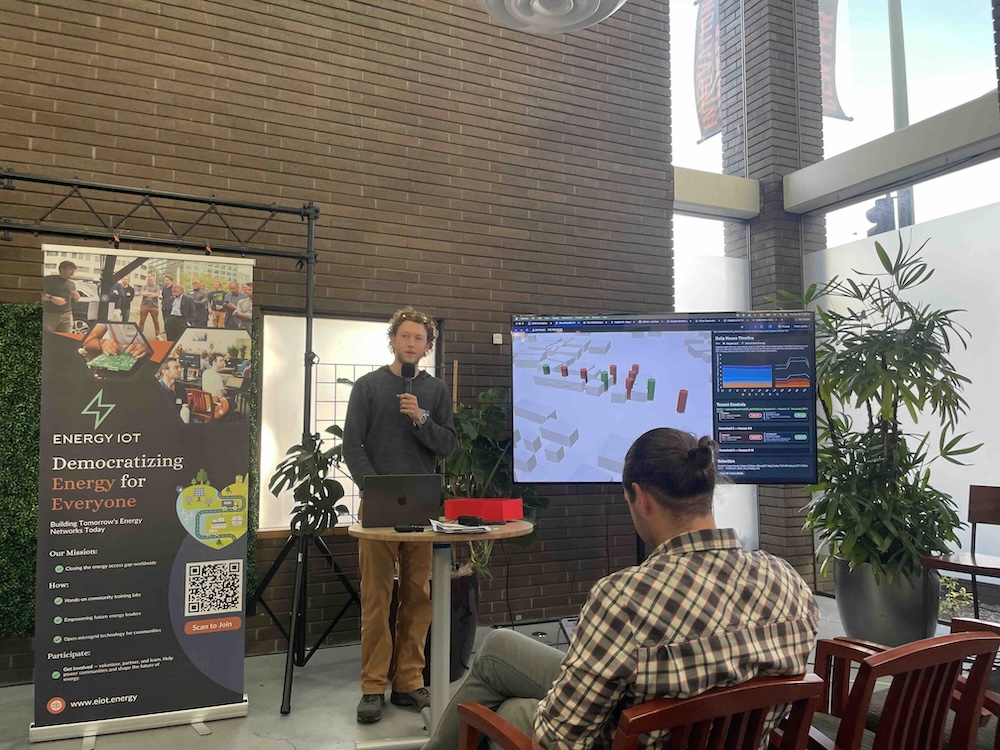
Next Steps: The brilliant people at NESL have donated some meshEMS hardware to NFE so we can test out the relay in production later this year and their founder Glenn will be coming to the Power Africa Conference in September 2026 to offer a training workshop to help us continue to leverage Open AMI ecosystem and meshEMS hardware.
Huge thank you to Adam S, Kyle B for leading the team that crushed this challenge.
All 3 challenges and the entire hackathon were made possible by the support of mentors Liam O, Glenn A and the amazing Arila B from Energy IoT Open Source. And of course hosted at Informal Spaces in Oakland run by Kyle V.
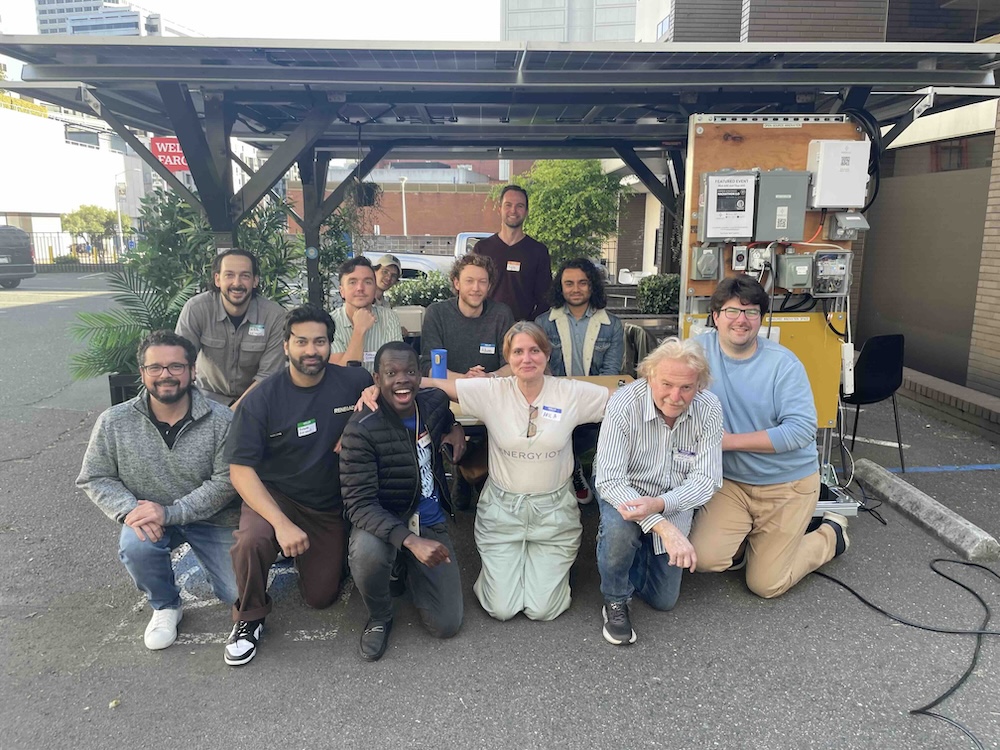
A million thanks everyone for contributing your ideas, skills, time and heart to this theme.
Community Microgrids need a community owned and supported software/hardware foundation to deliver on their promise of reliable, resilient and abundant energy for everyone.
Thank you all for helping lay that foundation!
Onward.. Upward.. ⚡
As always, if this work sounds relevant to you or your community. Get involved! 👇🏾
Energy IoT on Zulip
Energy IoT Open Source LinkedIn
Nearly Free Energy Matrix Room
NFE on LinkedIn
Leave a Reply