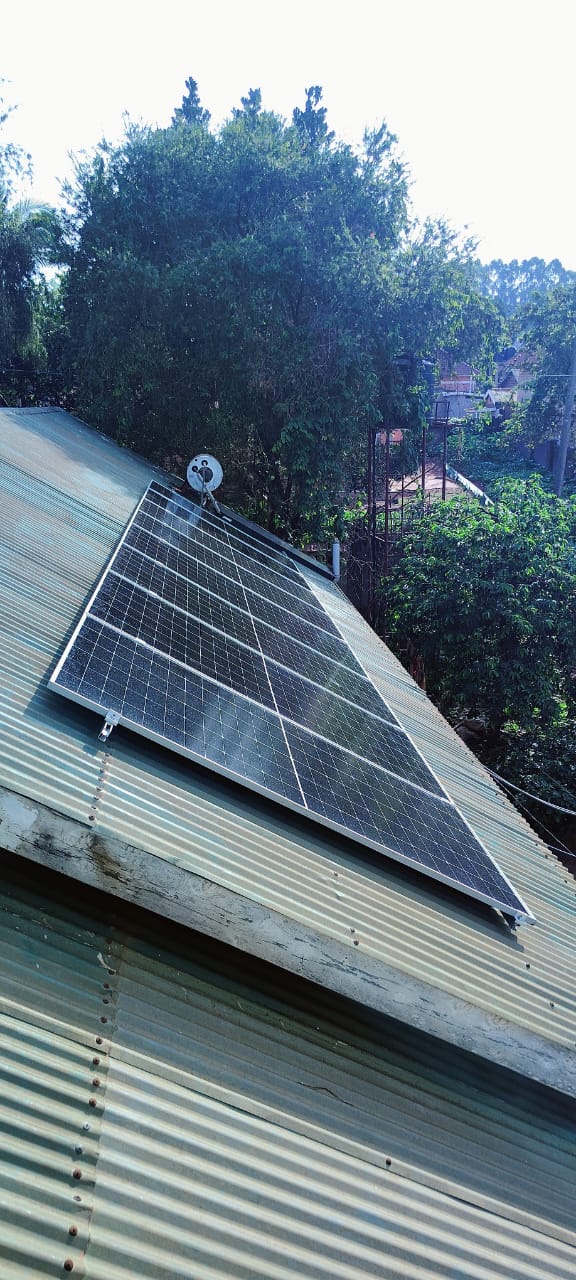
Since late August 2026, the 10 homes at Sezibwa Rentals have kept their lights on through about 90% of the hours the grid was down. NFE got there in phases on the site’s existing grid connection: smart meters first, then a shared battery, then rooftop solar.
The challenge
Sezibwa Rentals is a compound of 10 rental homes in Nansana, Wakiso, on the UEDCL grid. Between 25 August and 8 November 2026, the grid supply there failed 86 times, for 128 hours in total: about 1.7 hours a day. Most cuts lasted under an hour, and the longest ran six hours. Tenants reported 7 to 20 hours of unplanned cuts a week, and NFE’s monitoring measured about 12. Some cuts took out only one or two of the three phases. Without backup, tenants felt every one of those cuts, at home, at work and at study.
What NFE did: grow the microgrid in steps
NFE’s microgrid cultivation model adds one layer at a time, so the community takes on cost and change gradually and each step is proven with data before the next. Sezibwa moved from Monitor to Backup, and solar now starts the step toward Backbone.
| When | Step | What changed for the site |
|---|---|---|
| Jun 2025 | Agreement | Memorandum of understanding signed with Sezibwa Rentals |
| Sep 2025 | Phase 1: Monitor | One UEDCL commercial time-of-use meter for the site, with an NFE smart meter in each of the 10 homes and monthly NFE billing |
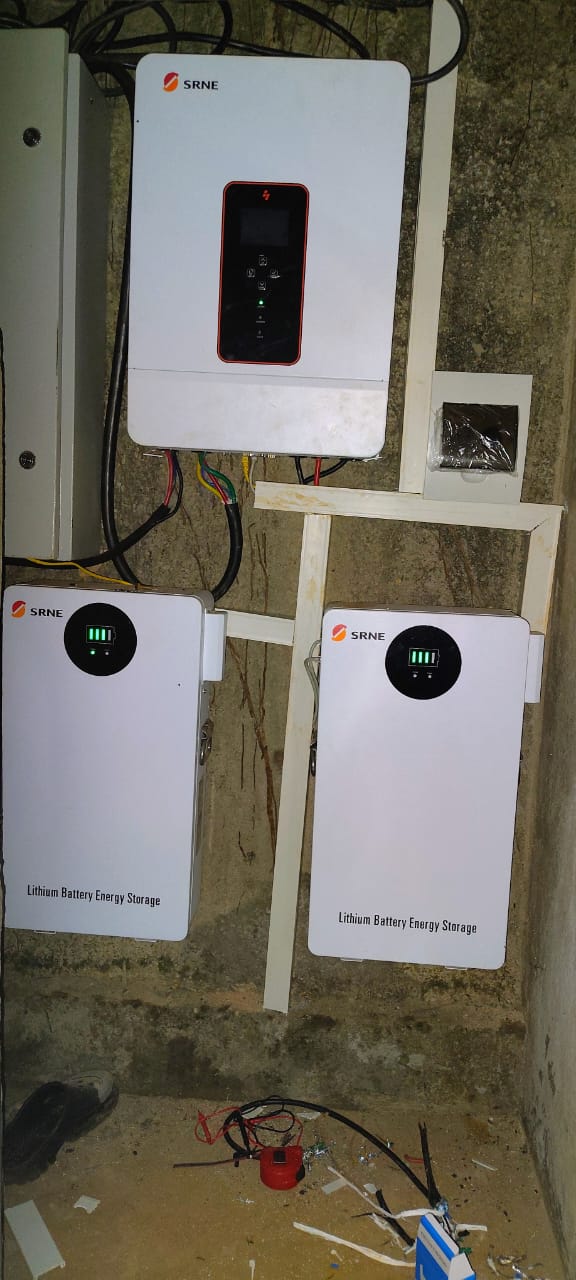
| Late Jul 2026 | Phase 2: Backup | A 10 kWh battery and a hybrid inverter keep the homes powered through grid cuts. NFE’s open-source controller (OpenEMS) monitors the site around the clock |
| 26 Sep 2026 | Smart charging | The battery charges at the cheap night rate and powers the homes through the expensive evening peak |
| 26 Oct 2026 | Phase 3: Solar | 4.8 kWp of rooftop solar refills the battery during the day |
Results: residents kept power through 90% of grid outage hours
In September and October 2026, the grid was down for 109 hours. Residents lost power for about 10 of them. In October, the battery carried the homes through 96% of 77 outage hours, including a six-hour night cut on 11 October that it covered with 60% charge left.
With solar and the new controller settings, NFE is targeting 99% coverage. The last few days have been at 96–100%.
| Month (2026) | Grid outages | Grid down (hours) | Residents without power (hours) | Outage hours covered |
|---|---|---|---|---|
| September | 16 | 32 | 7.1 | 78% |
| October | 48 | 77 | 2.9 | 96% |
| Total, Sep – Oct | 64 | 109 | 10.0 | 91% |
Source: NFE’s OpenEMS monitoring at the site, grid-side and home-side voltages every 5 minutes. Residents’ outage hours are estimated from times the home supply and the site controller went dark during a grid cut or with the battery empty.
Other gains
- Backup energy: from 26 September to early November, the battery supplied about 96 kWh to the homes during grid cuts.
- Cheaper evenings: over 40 nights, the battery moved 183 kWh of the site’s use from the evening peak to the night rate, saving about UGX 34,500 on the bulk power bill.
- Solar: since 26 October, the panels refill the battery by late morning. The grid’s night top-up fell 42% in the first days, and the best days so far produced 13–15 kWh.
- Residents adapted: tenants began telling each other when the site switched to battery, so everyone eased off heavy appliances and the backup lasted longer.
What we learned and fixed
Every hour residents lost power has a cause in the data, and each one changed how NFE runs the site.
- Phase balance (27 Sep): in a cut that started at 05:05, the battery carried the homes for three hours, then the inverter tripped with 67% charge left. Heavy appliances were concentrated on one phase. NFE rebalanced which homes sit on each phase, moving the heaviest users onto different phases.
- Settings that think (29 Oct – 5 Nov): while testing a solar-first setting, the battery ran down to its reserve before evening cuts, and homes lost power for up to two hours. NFE is replacing fixed settings with a controller that plans each day from the weather forecast and recent outages. Its first rule: residents never lose power.
- Measure first: every decision above came from the site’s own data. The same data lets NFE size the next site, and show a new client what the grid really delivers before anything is installed.
For the technical detail behind each step, see the go-live posts for Phase 1.0, Phase 2.0 and Phase 3.0, and our microgrid cultivation blueprint.
Leave a Reply