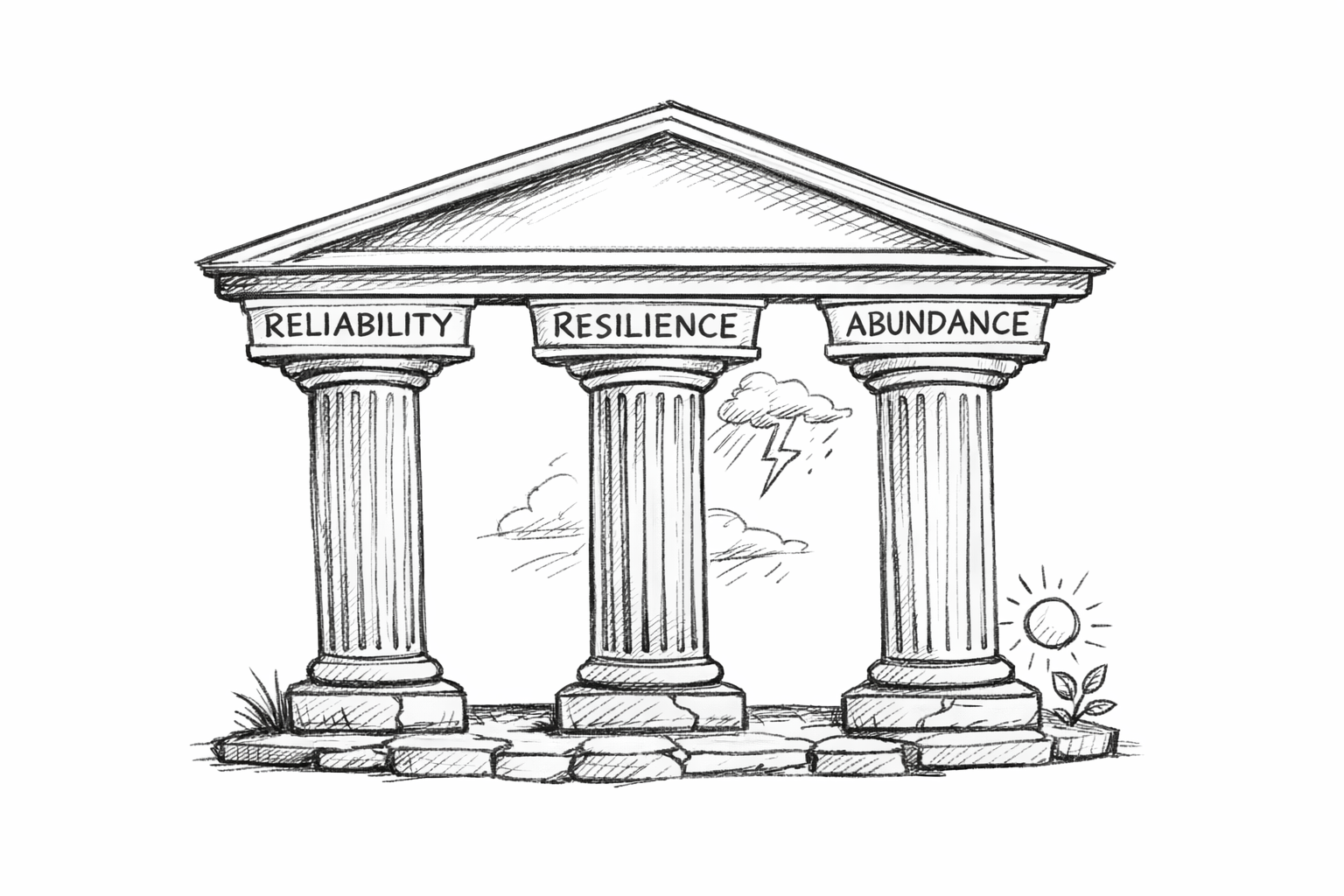
Why these three ideas sit at the center of our work at Nearly Free Energy
When people ask what really drives our work at Nearly Free Energy, I usually come back to three words: reliability, resilience, and abundance.
They sound technical at first, maybe even like utility jargon. But in reality, they describe very human experiences; the frustration of power going off in the middle of the day, the anxiety during a long blackout, and the quiet calculation people make every month about whether they can afford to pay their electricity bill.
These three qualities shape how we think about energy, how we design our systems, and why we exist as a company.
Reliability: Keeping the Lights On During Everyday Life
Reliability is the one most of our customers immediately understand — because they live with unreliable electricity every single day.
At its simplest, reliability is about providing uninterrupted power under normal conditions and during expected, short disruptions ; things like minor equipment failures or routine storms.
The usual ways to measure reliability are pretty straightforward:
- how often outages happen (frequency)
- how long they last (average duration and time to restore)
The goal here is simple: electricity should stay on during everyday events.
How we work toward reliability
Automated backups
We collect detailed outage data from the communities we serve. When the grid goes down, backup power comes on automatically. Because we track outage frequency and duration, we can size these backups more accurately; not guessing, but responding to real patterns.
Predictive maintenance
We invest in high‑quality equipment; meters, inverters, solar panels, batteries and we monitor them continuously. That lets us spot performance issues early and fix them before they turn into outages. The goal is to prevent failure, not just respond to it.
Reliability is about trust. When people flip a switch, they shouldn’t have to wonder whether power will be there.
Resilience: When Things Go Really Wrong
Resilience is often misunderstood, even within the energy industry.
While reliability focuses on normal conditions, resilience is about rare but severe events: floods, major grid failures, fuel shortages, or system-wide breakdowns that cause long outages.
Resilience asks a different question: when something big goes wrong, how quickly can we recover — and what can we keep running in the meantime?
Key metrics here include:
- mean time to restore power
- the percentage of critical services kept online
The goal isn’t perfection. It’s to minimize the damage of a catastrophe.
How we design for resilience
Microgrids
We build grid-connected but islandable microgrids; smaller networks that can disconnect from the main grid and operate independently when necessary. This prevents a single failure upstream from taking everyone down with it.
Peak‑shaving and load prioritization
During severe outages, not every load can be supported equally. We design systems that prioritize critical needs; lighting, refrigeration, communications; instead of spreading limited power too thin.
Resilience is about dignity during crisis. Even when systems fail, life shouldn’t come to a halt.
Abundance: Energy You Can Actually Use
Abundance is our favorite of the three; because it’s the one that changes behavior.
Energy abundance means electricity is both sustainable and affordable. People shouldn’t have to choose between using power and protecting the environment. And they shouldn’t feel anxious every time they turn something on.
Our working definition is simple:
- energy is generated from renewable sources (like sunlight)
- electricity costs less than 2% of a household’s monthly income
When those two conditions are met, we consider energy truly abundant.
Key metrics include:
- percentage of energy from renewables
- the ratio of monthly electricity bills to household income
The goal is clear: expand access to clean energy without financial stress.
How we work toward abundance
Renewables only
We made a deliberate and costly decision to run our microgrids on 100% renewable energy. Lithium‑ion batteries are expensive upfront, but they allow solar to serve not just as backup power, but eventually as the primary source for entire communities.
Usage transparency
We use smart meters that give customers real‑time insight into how their homes consume electricity. When people can see usage as it happens, they can adjust behavior immediately keeping bills affordable without guesswork.
With abundance comes freedom: freedom to cook, study, work, and live without constantly counting units.
The Three Pillars, Together
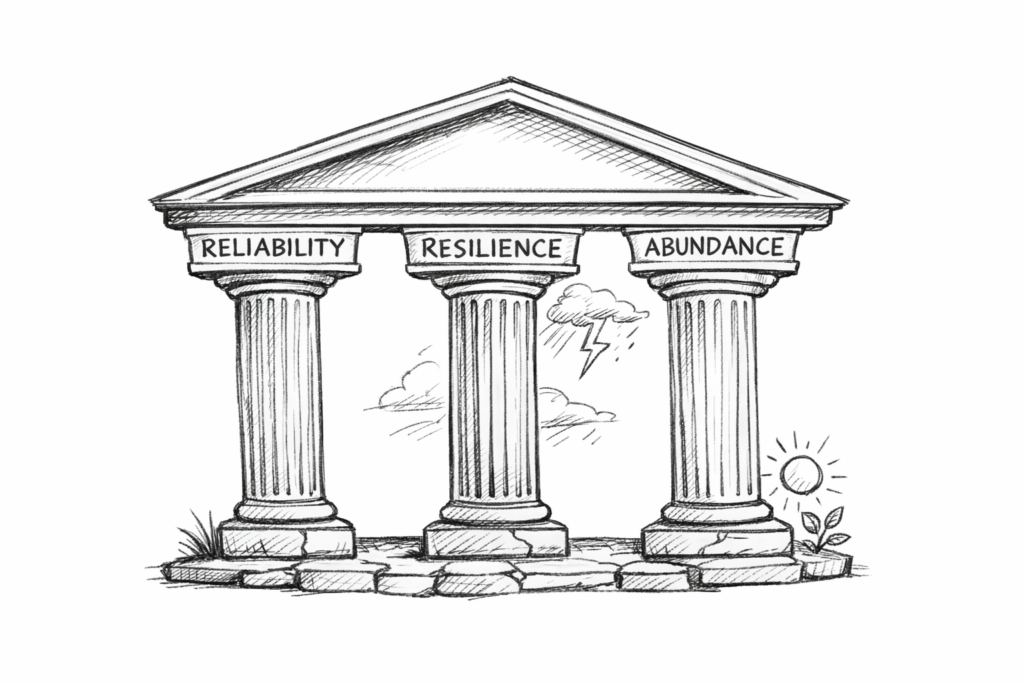
Reliability, resilience, and abundance aren’t independent ideas. They reinforce each other. They are at the heart of the energy access movement.
When energy is reliable, people trust it.
When it’s resilient, communities survive disruption.
When it’s abundant, energy becomes an enabler rather than a constraint.
At that point, electricity stops being just a commodity to manage.
It becomes a tool for community transformation.
That’s the future we’re building at Nearly Free Energy. Learn more here